Pismo's Monarch Butterflies: Oh My!

A huge benefit to heading north in the winter is the chance to see thousands of butterflies.

The Pismo Beach Monarch Butterfly Grove is one of only five sites in the state that has counts of over 10,000 butterflies annually. Each year vibrant orange and black Monarch Butterflies flock here, a location essential to their successful migration, seeking shelter from the freezing northern winters.

From late October to February, the butterflies cluster in the limbs of towering, majestic Eucalyptus trees flanking a riparian estuary that flows to the Pacific Ocean. And lucky us, our timing couldn't have been more ideal.

The butterflies form dense clusters with each one hanging with its wing down over the one below it to form a shingle effect. This provides shelter from the rain and warmth for the group. The weight of the cluster help keeps it from whipping in the wind and dislodging the butterflies.
From a distance, the cluster looks like a grouping of dead leaves but with the aid of a scope or a telephoto lens, the cluster is vibrant- alive with color, patterns and movement. Wow.

The Monarchs that visit Pismo Beach are a special variety. They have a life span of six months as opposed to that of common Monarchs who live only six weeks. This can be attributed to a unique fat storing system. However, even with an extended life span, those butterflies that leave in March will never return. It is all so mesmerizing.

This place is truly a place of wonder and renewal. Butterflies make me happy!


"Butterflies are self propelled flowers."
-R.H. Heinlein

posted under | 1 Comments

Elverhøj Museum of History & Art

No visit to Solvang is complete without savoring Æbleskivers, the Danish snacks that are spherical in shape. The name literally means apple slices in Danish, although apples are not usually an ingredient in present-day versions. The crust is similar in texture to European pancakes, but with a light and fluffy innard like a popover. Oh man, yum!


Solvang, for those unaware, was founded in 1911 on almost 9,000 acres of the Rancho San Carlos de Jonata Mexican land grant, by a group of Danes who traveled west to establish a Danish community far from the midwestern winters. While we have visited this darling village several times, this was the first time we knew about a museum being in town. We do love museums.
Elverhøj Museum of History & Art is housed in the home of Viggo Brandt-Erichsen (1896-1955), a Danish-American artist and sculptor. He built Elverhøj as his dream home and studio — almost single-handedly, and without any nails, over a period of four years. It was the ideal setting for gaining local knowledge.
The Spirit of Solvang: From Danish Roots to California Colony is the current exhibition in the Museum Gallery. It celebrates Solvang’s early settlers who achieved the American Dream while honoring their Danish heritage and, in so doing, created the town we know today. Meticulously restored black and white images from the museum collection tell the story of Solvang from its founding to its transformation into a tourist destination.
Visitors to Solvang are often curious about the origins of the picturesque downtown of half-timber Old World–style buildings and windmills. The story behind these facades dates back more than a century to when the Danish colony was established as the home for a traditional folk school on the West Coast of the United States. It was this tradition of life-long learning that would educate the new town’s young adults while maintaining the heritage, culture, and traditions of Denmark.

Throughout the museum are exhibits showcasing Danish traditions, crafts and culture. It truly was a history lesson, housed in a spectacular home.


And while Elverhøj is a museum, one never forgets this was a much loved home.


This was one of those surprise discoveries that becomes a highlight of one's travels.

Viggo said of Solvang:
When you look for a place... and you find Utopia
— then you stop looking, and say, "There!"

posted under | 0 Comments

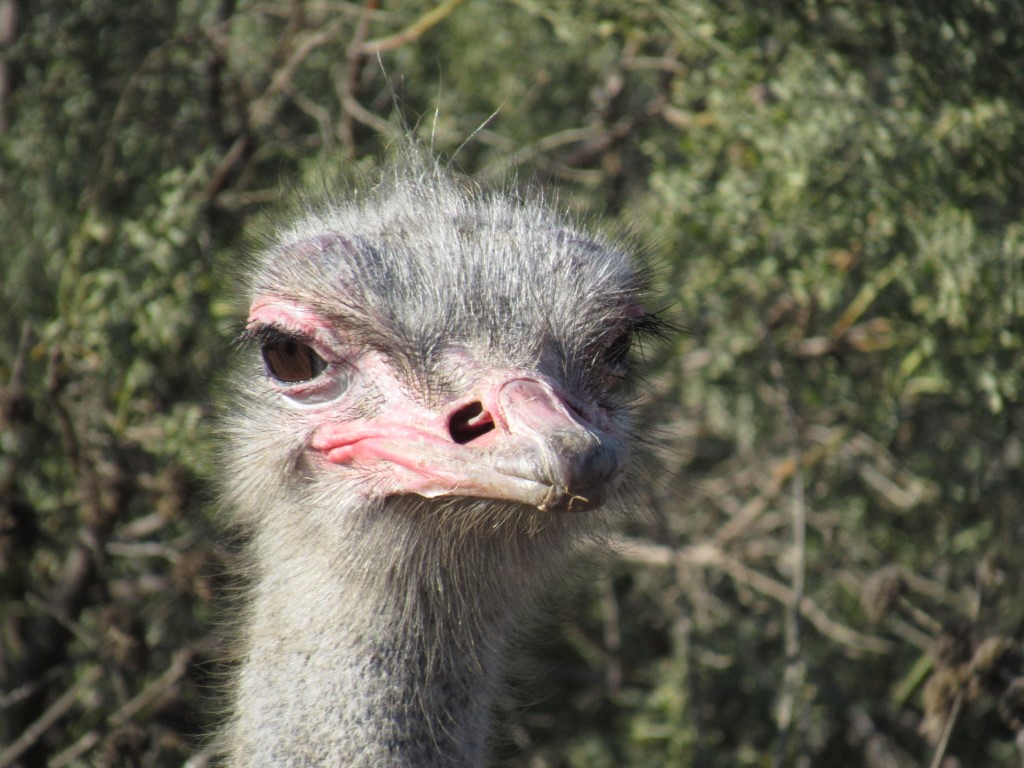
OstrichLand USA...

This stop was worth the $5 entrance fee, anyday! This 32 acre farm is just our kind of roadside attraction.

Here we found the biggest, heaviest and fastest birds on the Central Coast – and in the world.
We even learned some cool egg facts. The giant eggs are the largest of any living bird at 6" long and weighing as much as two dozen chicken eggs, though they are actually the smallest eggs relative to the size of the adult bird. The eggs are incubated by the dominant female by day and by the male by night, using the coloration of the two sexes to escape detection of the nest, as the drab female blends in with the sand, while the black male is nearly undetectable in the dark. When the eggs hatch after 35 to 45 days incubation, the male usually defends the hatchlings and teaches them to feed, although males and females cooperate in rearing chicks.
Blake Fowler manages the 32-acre farm, his family having taken over OstrichLand 16 years ago and put him in charge. Fowler says the first ostriches were brought to the farm by the original owner in the late 1980s from South Africa where the birds are native. What a cool find in California.


We even got to witness the ostriches performing their complex mating ritual. This dance consists of the male alternating wing beats until he attracts a mate, when they will go to the mating area and he will drive away all intruders. They graze until their behaviour is synchronized, then the feeding becomes secondary and the process takes on a ritualistic appearance. The male will then excitedly flap alternate wings again, and start poking on the ground with his bill. He will then violently flap his wings to symbolically clear out a nest in the dirt. Then, while the hen runs circle around him with lowered wings, he will wind his head in a spiral motion. She will drop to the ground and he will mount for making baby ostriches. So interesting.

We then met some emus, the second-largest living bird by height, after its relative, the ostrich.
Emus are soft-feathered, brown, flightless birds with long necks and legs, and can reach up to 6.2 ft in height. Emus can travel great distances, and when necessary can sprint at 31 mph. These guys were just happy chilling out and letting people feed them (a whole bowl only costing tourists $1- this place is a deal).
This video does a good job showing how these pampered guys eat. So fun to watch. This was a perfect place to play tourist.

posted under | 2 Comments

Santa Barbara For A Brief Pause...

Our brief visit here was for a firsthand look at one of the country’s most beautiful public buildings, the Santa Barbara County Courthouse. Designed in the Spanish-Colonial style and completed in 1929, the still-functioning Courthouse is an iconic Santa Barbara landmark with its distinctive four-faced clock tower, red tile roof, elegant arches and verdant sunken garden and grounds. A must-see for us.


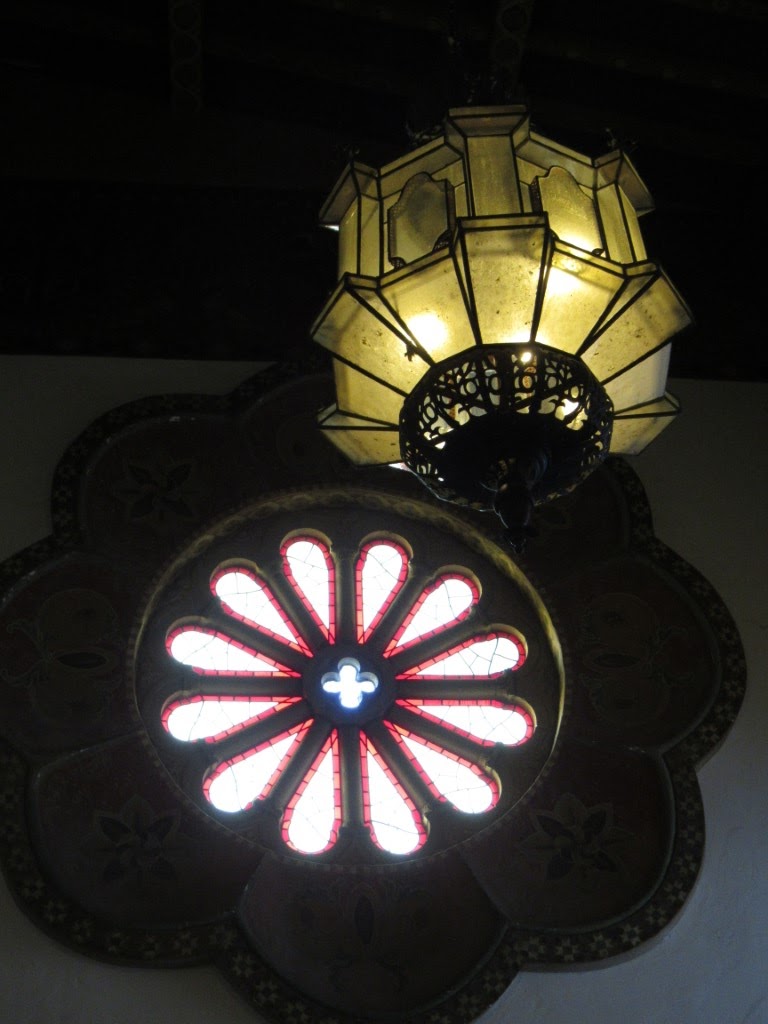
Inside, you can get a visual history lesson from the elaborate hand-painted murals, marvel at ornate wrought-iron chandeliers and climb to the top of the clock tower for a fabulous 360° view of Santa Barbara and beyond.
The exceptional panorama in the Mural Room is the work of Daniel Sayre Groesbeck (1879-1950). It has been called “the unquestionable masterpiece of the courthouse interior.” As one enters the Mural Room, you are enfolded by Santa Barbara history — 6,400 square feet depicting scenes from the community’s past. 


A real treat was to see the Bisno Schall Clock Gallery. Until 2012, the mechanism of the huge clock, installed in 1929, was hidden behind plywood walls. Surrounding the clock is an impressive 60-foot mural depicting the history of timekeeping. Wow.


Brief but breathtaking. This has been a great start to Day #2.


“I can speak to my soul only when the two of us
are off exploring deserts or cities or mountains or roads.”
-Paulo Coelho

posted under | 1 Comments
Newer Posts Older Posts Home

Get new Blog Posts to your inbox. Just enter name and email below.


We respect your email privacy

Blog Archive


Recent Comments